
Murfreesboro Oral Surgery & Implant Center

Facial Injuries – What Do I Do?

Facial-InjuriesIt’s important to know what to do when you or someone close to you has been injured, especially when it comes to facial injuries. The inside of your mouth is made up of delicate soft tissues that when cut can become infected and easily damaged if the wound isn’t taken care of quickly. Anyone who has had a facial laceration knows that there is a high degree of emotional and physical pain involved when it comes to a facial laceration. So what should you do?

A laceration is a tear or jagged wound and is usually caused by blunt trauma. If you’ve been in an accident and there is any kind of trauma to your face, it is important to seek emergency assistance right away. Lip lacerations are one of the most common types of facial injuries and require careful repair. Lacerations are closed using silk or gut sutures and are done carefully in order to prevent any cosmetic damage. If a tooth is knocked out you should place it in salt water or milk as soon as possible. The sooner the tooth is placed back into the dental socket, the better chance it has of surviving. Do not clean or wipe off the tooth since there are crucial parts of the tooth that could become damaged.

Replanting teeth and treating tooth fractures can be handled by an oral surgeon along with facial trauma but if you have been involved in a serious accident you should go to the closest hospital emergency room as soon as possible. Facial bone fractures cannot be treated with a cast like other parts of the body. The surgical placement of plates around the affected area is a recent development in medicine that allows for a faster recovery time and involves the fewest incisions necessary.

Any kind of traumatic injury to your face is serious and should be addressed immediately to prevent further damage and scaring. If you’ve had a recent injury and think you may have a facial bone fracture, call us immediately to schedule a consultation.
Are Dental Implants Worth It?

Are Dental implants worth itWhat’s involved in a dental implant? Do they hurt? Can anyone get them? There are a lot of questions surrounding dental implants but one thing is certain; they’ve been reconstructing smiles for over 35 years with amazing results. But what’s the fuss surrounding dental implants and are they really worth it? Lets answer some question to help you decide for yourself.

Can anyone get a dental implant? Anyone who is healthy enough to get a dental implant can get one as long as they have enough bone to hold the implant. This is where bone grafting comes in for those who have been told their jawbone won’t hold an implant. Keeping up with regular oral hygiene is also an important factor and heavy smokers may be told it’s not a safe option.

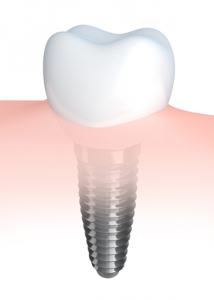
What exactly is a dental implant? A dental implant replaces your tooth root with a metal rod. It provides a solid structure on which to place a new tooth that is made to match your real teeth. Dental implants not only improve the overall look of your smile but they’re durable, convenient, and easy to take care of.

What are the steps to getting a dental implant? As your doctor, we will want to develop an individualized treatment plan that focuses on your specific needs. Once we have agreed on a treatment plan, the next step will be the placement of the implant in your jaw. The implant is made of titanium and once placed the jawbone will actually begin to grow around it. In about six to twelve weeks the implant will have completely bonded to your jaw and it will be time to attach a small post that connects your new tooth to the implant. We create a mold of your bite that allows us to create your new tooth. This replacement tooth is then attached to the post and the implant process is complete!

Lastly, how painful are dental implants and are they difficult to take care of? Most patients have said they experienced very little discomfort when receiving their implant. Many have even said the process is much less painful than a tooth extraction. Mild pain that may occur for a few days after you receive your implant can be treated with over-the-counter pain medication. Dental implants require the same care as your real teeth but generally they are much easier to clean and you don’t have to worry about cavities.

We hope this answers some of the questions surrounding dental implants. If you’re missing a tooth or teeth, give us a call to ask more about the procedure. We’ve seen many patients leave happy and comfortable with their improved smile!

Head & Neck Cancer Self Exam (How-To)

Head-and-Neck-Cancer-Self-ExamRegular oral pathology exams are extremely important when it comes to preventing head and neck cancer. When you visit us make sure to ask about the exam if you haven’t had one before or have noticed anything strange on the inside of your mouth. It’s also good to perform an oral pathology check on yourself from time to time. Let’s go over how to do an at-home check and what you should be looking out for.

Step 1: Know what you’re looking for. Oral cancer signs include:

  • A difference in color in one particular area
  • A change in texture
  • Lumps of any kind (especially if it’s something you haven’t noticed before)
  • Lesions

Step 2: Take a bright light such as a flashlight and while looking in a mirror, check the following:

  • Tongue
  • Lips
  • Cheek walls
  • Top and bottom of mouth
  • Back of throat

If you notice any of the above signs, give us a call immediately to schedule an appointment. It’s also beneficial to perform an extra-oral screening. When performing an extra-oral exam on yourself, you want to feel for any lumps or bumps. Here are the steps for doing this exam at home:

Step 1: Place your hands on the back of each side of your jaw under your ears. Open and close your jaw while feeling for any bumps.

Step 2: With your hands in the same position work your way down your neck.

Step 3: Turn your head to the right and feel your left side-neck muscles. Turn your head left and feel your right side neck muscles.

Step 4: Grab your gullet and swallow.

Step 5: Put your chin down and with your palms facing away from you feel the underside of your jaw with your fingers.

We hope we don’t have to see you in the office if you’ve discovered something wrong but we are here to help. We can catch the early signs of oral cancer! If you feel anything strange, call us to schedule an appointment.

Bar Attachment Denture Your Questions Answered

All-on-4With all the different dental treatments out there these days it’s hard to keep track of what might be the best option for you. If you currently wear dentures or are missing all of the teeth on your top or bottom jaw, then Bar Attachment Denture dental implants are most likely the right choice. Bar Attachment Denture dental implants are different than dentures in that they are a permanent set of teeth that do not require removing. They look and feel like real teeth and tend to be much easier to deal with than dentures. Let me answer some common questions about what Bar Attachment Denture really involves:

How are Bar Attachment Denture dental implants different than traditional implants?

Whereas in the past, implants for a whole row of teeth used anywhere from six to eight implants, Bar Attachment Denture (you guessed it!) only uses four implants. This means less time spent in surgery and a more comfortable experience for you.

Who is the best candidate for Bar Attachment Denture?

If you’re already wearing dentures and find them to be uncomfortable, you are a prime candidate for this procedure. If you’re missing teeth and can’t decide between dentures or implants, I urge you to continue reading and give us a call to schedule a consultation. In either case, if you’re missing your natural teeth, Bar Attachment Denture is in most cases the most favored treatment.

Is it a painful procedure?

Most of our patients who have received Bar Attachment Denture implants have described the procedure as being relatively painless. We will discuss all the anesthesia options available to you during your consultation and monitor your vital signs during the entire procedure.

Are there any foods, drinks, or medications that I need to avoid before the procedure?

We will discuss all the medications you use during your consultation and let you know if there are any you should stop taking before the procedure. We may ask you to stop taking medications like blood thinners a few weeks before your scheduled procedure. If we decide that sedation is the best option for you during the surgery, you won’t be able to consume any food or drinks, including water, eight hours prior to the procedure.

I encourage you to give us a call if you’re unhappy with your dentures or if you are in the process of deciding between dentures and Bar Attachment Denture. I hope to speak with you soon!

History of Bone Grafting

The concept of bone grafting is nothing new. In fact it has been an important part of medicine as far back as the early 1600’s and in recent years has become a standard procedure for people who need a dental implant or have had a traumatic jaw injury. Shortly after the invention of the microscope, the Dutch doctor Jacob van Meekeren performed the first bone grafting operation on a soldier with a damaged skull. Unfortunately, back then doctors didn’t have the knowledge or bone grafting materials that we have today and in order to save the soldier, Jacob van Meekeren was forced to use a piece of dog bone as implant material. Van Meekeren was pleased with the surgery’s success, but it wasn’t until the soldier returned asking to have the implant removed that van Meekeren discovered just how successful it really was!

In the 1600’s, the Christian church looked at things a little differently and this poor soldier with a piece of dog bone in his skull was excommunicated after the church considered him to be part dog. What was upsetting for the soldier aided in the discovery of how well bone grafting actually worked. In the process of attempting to remove the bone graft, van Meekeren discovered that the bone had healed too well and was actually irremovable!

Bone grafting developed over the next 150 years and by 1821 the first graft of tissue from one point to another of the same individual’s body, known as an autograft, was performed in Germany. During WWI and WWII, bone grafting continued to develop as more soldiers became crucially wounded and a need for advanced surgeries became necessary. After another fifty years the first synthetic ceramic product was cleared for use in 1991.

As you can see, bone grafting has a much longer history than you might have imagined! To find out if you are a good candidate for bone grafting, give us a call!

Teeth Nerve Stem Cells Signal New Age of Recovery

Have you ever thought about the possibility of growing new teeth? Of course, when we are younger, this phenomenon does occur, with adult teeth replacing our missing baby teeth. Many scientists and doctors, however, believed it was impossible, or highly unlikely for adults to ever form new teeth.

Yet only recently, researchers in Sweden have discovered that such a feat may one day become commonplace. While most scientists did know that the pulp in teeth contains a certain amount of stem cells, the Swedish researchers of the Karolinska Institute have discovered the origin of these cells.

These stem cells are typically used to help reform damaged teeth by assisting with the restoration of tooth tissue. Upon further examination, however, the researchers have discovered that these stem cells originally were nerve cells of the tooth. These cells leave the nerves at early stages of development, changing their identity to become part of the connective tissue, which forms dentin underneath the enamel.

The future possibilities for this discovery are almost endless. Using these nerve tissues, it may be possible for scientists to manipulate the stem cells to form new adult teeth. As these teeth will essentially be copies of one’s original teeth, this innovative process may replace veneers and other restorative processes as the best form of teeth restoration.

In fact, the benefits of this discovery may not stop with just teeth. Igor Adameyko, from Sweden’s Department of Physiology and Pharmacology, believes that all types of peripheral nerves, not just the ones found in teeth, “may function as important stem cell reserves.” Adameyko hypothesized that these “multipotent stem cells can depart from the nerves and contribute to the healing and reformation of tissues in different parts of the body.”

To summarize this exciting research, tooth nerve cells may be the key to a new wave of human recovery and restoration, and adult tooth creation is only one of these recently discovered benefits!

Dental Implants- A Three-Step Procedure

One of the most common questions we hear from patients when it comes to dental implants is “Why does it take three separate procedures?”

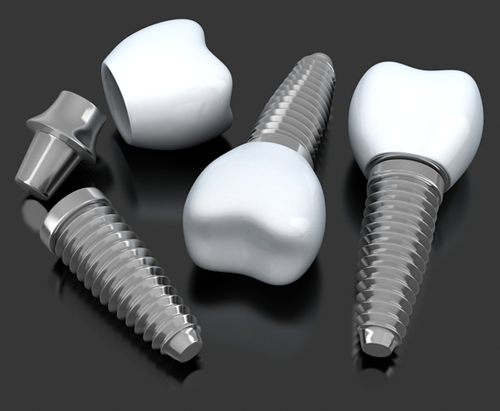
It helps to understand that within the entire dental implant process, there are not just three stages, there are also three important parts to the final product that replaces your tooth. First, there is the implant itself, which is the metal rod that we surgically implant into the bone. Next, there is the abutment, which connects the implant to the artificial tooth. And lastly, the crown (or prosthetic tooth) itself.

The fact that the process has three physical components alone doesn’t tell the whole story though. Here, we explain why the most commonly employed dental implant method is split up into three separate procedures.

Step One: Placing the Implant

The first stage of the dental implant process is to bury the implant in the jaw bone via a surgical procedure. The dental implant replaces the tooth root, and requires healing time. During this healing time, osseointegration (the integration of the bone with the implant itself) occurs. The bone cells actually attach to the implant rod, filling in the spaces to secure the implant in place for permanent residency.   The healing time usually takes from 3-6 months.

Step Two: Placing the Abutment

The abutment is a post that connects the implant to the prosthetic tooth. Essentially, the abutment is a bridge that spans through the gum line so that the implant itself remains buried. As with the implant, the abutment has a healing period of its own. The gum around the abutment must heal and form a cuff or collar around it before the crown can be placed.

Step Three: The Prosthetic Tooth

Once the implant site and abutment have successfully integrated, the prosthetic tooth is fabricated and installed.

If you have any questions about the dental implant process, give us a call!

On the Field and Court – Facial Injuries

It used to be that we would see most of our sports-related facial trauma patients in the fall and winter, when sports participation typically reached its highest point. But nowadays, we see a steady stream of sports injuries to the face in our office year-round. Because more children, teens and adults participate in sports in all four seasons (which is great), we see more sports-related facial injuries now than ever before (not so great).

Not only is the face the most vulnerable part of the body during a game, it is also almost always under-protected. Facial injuries account for about 11-40 percent of all sports injuries. Even in a “no-contact” or “less-contact” sport where player-to-player injuries are rare, a person can still be hit by a ball, bat, club or other item and experience trauma to the face.

Two types of sports-related facial traumas make up the majority of cases we see:

  1. Soft Tissue Injuries: Lacerations are a common type of injury when playing a variety of sports. In addition to cleaning and suturing the cut, we also pay special attention to providing for the best possible cosmetic result and thoroughly examining any nerves, glands and ducts that may have been injured.
  2. T-Zone Fractures: Also very common with sports injuries are fractures of the nose, zygoma (cheek bone) and mandible (jaw).   Because we can’t put a cast on the face, sometimes fractures must be stabilized using wires, screws and plates.

How to Prevent Facial Injuries on the Field and on the Court:

Many of the most common sports-related facial injuries are also preventable. Here are some of the best ways to protect your face when playing any sport where injury to the tooth or face is a risk:

  • Mouth Guards: Simple, inexpensive and increasingly mandatory in many sports, mouth guards are the first defense against injury to the tooth, and may even help to lessen or prevent concussions!
  • Face Masks: As time goes on, you will see more and more sports, most recently softball, requiring facemasks to protect young players.

If you have any questions about how to protect yourself from sports-related facial trauma, don’t hesitate to ask us!

Facts About Bone Grafting

Facts About Modern Bone GraftingDid you know that with today’s modern techniques, bone grafting is now considered a routine treatment? A bone graft can fix a variety of facial and dental problems and may be required in some cases. If you’ve been told in the past that you’re not an ideal candidate for getting a tooth implant, call us to ask about how a sinus graft makes it possible for many of our patients to receive dental implants. Here are a few things you should know if you’re thinking about getting a dental implant or think a bone graft could help you.

It’s a routine procedure!

Bone grafting has become a standard practice. Depending on the quantity and quality of jawbone, most procedures take place in our office and we use local anesthesia or conscience sedation to relieve any anxiety.

Bone loss has been virtually eliminated!

The only reason our jaws have the amount of the bone that they do is because of the presence of existing teeth. Complicated procedures were developed in the past to attempt to rebuild jaws that had atrophied due to missing teeth and disuse but with the modernization of bone grafting and dental implants, we can prevent jawbone atrophy all together.

There are a variety of materials that can be used.

The bone grafting material you need could come from a variety of sources. Generally, we use bone taken from your hip, jaw, or lower knee but today we have the ability to grow bone where needed or obtain bone from a tissue bank. We also use special membranes to help protect the bone graft and encourage bone regeneration.

Bone grafting allows your body to rebuild itself.

The human body uses most bone grafting materials as a frame on which it can grow new bone. Over time the graft material will be replaced with new bone through your body’s own process of bone regeneration. Maintaining a healthy amount of bone tissue around your teeth is crucial in keeping up your oral health.

If you have a missing tooth, congenital defect, or have had a traumatic jaw injury, and you’re wondering whether you may need bone grafting, give us a call. We can answer your questions, and present the treatment options that are best in your individual situation.

Teeth in the News- Dental Care Reduces Respiratory Infections in the ICU

We are always pleased to pass along any oral health information to our patients and their families as we come across it in our various news sources. Simply put: we love it when we find teeth in the news!

While we don’t spend significant time in hospitals ourselves, we were still happy to hear about a recent study that suggests that patients in the intensive care unit (ICU) of a hospital benefit from enhanced dental care in more ways than you would expect!

Typically, in an ICU setting, patients receive routine oral hygiene treatments from the nurse staff. However, when researchers assigned half of the patients to receive enhanced dental care from a dentist that included brushing, tongue scraping, calculus removal and more, they found that those patients were 56% less likely to develop a respiratory tract infection during their ICU stay.

This is significant because hospital-acquired infections such as respiratory infections are not uncommon due to the nature of the hospital environment and can be dangerous for vulnerable patients. You may be wondering “What is the connection between oral hygiene and respiratory infections?” In fact, infections such as these often originate in the oral cavity. Catching them early before they get into the major organs of the body may be one way to combat healthcare-associated infections.

This is just another example of how your oral health affects the health of your whole body! Be sure to employ excellent brushing and flossing habits at home while you are well to avoid additional problems in your body down the road!