
Murfreesboro Oral Surgery & Implant Center

Dental Implants: Are They Right for You?

Not everyone is blessed with perfect teeth. Many people would tell you they lack the smile they’ve always wanted due to genetics, disease, and sometimes even accidents. Fortunately, we have a solution. With dental implants, you will no longer feel self-conscious about your smile; but rather delight in having a new and improved grin!
Dental Implant FWhat are dental implants?

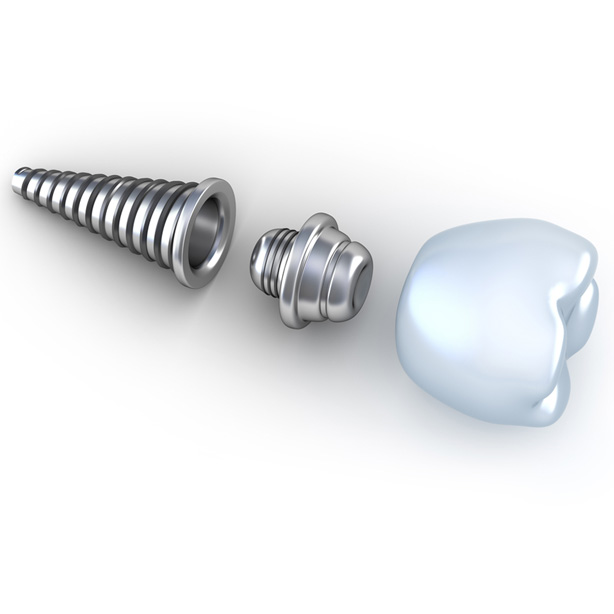
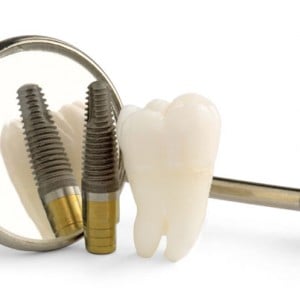
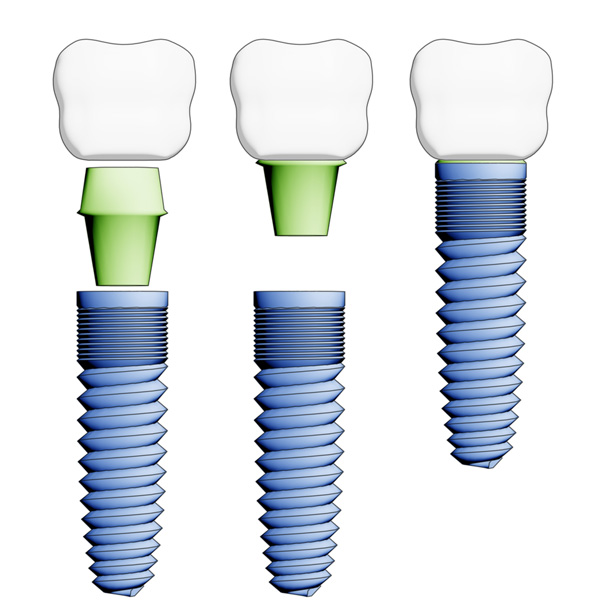
Technically, dental implants are replacement roots for missing teeth.  First, the implant, a titanium screw, is inserted into the jawbone.  Next, a removable or permanent replacement tooth is attached to the top of the implant to mirror the appearance of your natural teeth. Currently, over 3 million people worldwide have dental implants and the technology has reached a point where each procedure has a 98% success rate.

Why should I get dental implants?

Beyond simply improving the appearance of your smile, dental implants include many other benefits:

  • Oral health: Unlike other restorative procedures, dental implants do not necessitate the reduction or alteration of neighboring teeth, thus resulting in improved oral health overall.  Additionally, dental implants do not interfere with access to neighboring teeth, so it is no harder to brush or floss.
  • Longevity: While other dental aides such as dentures and bridges inevitably require replacement, dental implants are extremely durable, lasting many more years and in some cases even a lifetime!
  • Convenience: Dental implants do not ever need to be removed for activities such as eating, drinking and brushing, and do not require adhesives.  They act, look and feel just like natural teeth!

How much do dental implants cost?

Dental insurance does not always cover the cost of dental implants.  However, in the long run, dental implants are usually cheaper than other restorative procedures. Because they do not need to be replaced, the initial investment for implants is well worth the price.

Dental implants are becoming a popular trend in the world!  Call us to set up an appointment to upgrade your smile!
Traveling and Oral Health: Tooth Tips for the Holidays

We don’t have to tell you:  the winter holidays mark one of the busiest seasons of the year.  With shopping, parties and vacations jam-packed on the calendar, it’s no wonder that many people take shortcuts when it comes to oral health maintenance during this time.  If you are traveling during the holiday season and you want to avoid a January surprise cavity (or worse), here are some simple tooth travel tips to help you keep your smile intact.

  1. TravelDon’t leave home with a toothache!  If you suspect you have any lurking problems in your mouth, schedule an appointment prior to your travel date so that you don’t end up with a tooth emergency while out of town.  Research emergency dental clinics in your destination city and have those numbers handy to ensure that your time off is as relaxing as possible.
  2. No one ever regrets buying travel-sized gear. Keeping a travel toothbrush, floss and toothpaste on hand in addition to trial sizes of your favorite toiletries reduces your packing time, and not just during the holidays.
  3. Splurge on probiotics! Diseases and germs run rampant in buses, airports and other communal places that you might encounter during your trip. Researchers believe that probiotics are not only good for the gut; they may help maintain optimal oral health too!
  4. Toothbrushes don’t last forever! Generally, dentists recommend that you buy a new toothbrush every two to three months when at home.  However if you are traveling, your toothbrush is exposed to even more bacteria.  It’s best to toss it when you return home and swap it for a fresh brush, even if it hasn’t hit the three-month mark yet.
  5. Chewing gum is a limitless oral-health-on-the-go tip! Bringing sugar-free gum with you has multiple benefits; not only does it taste good and make your breath smell fresh, but the gum can help remove food that may be stuck in your teeth as well, acting as a secondary toothbrush.

Dental Implants: What Should I Believe?

Dental Implants have become commonplace, with over 3 million people worldwide hosting some sort of implant. Unfortunately, their rising popularity has been accompanied by an increasing number of misconceptions about what they can and can’t do.

Dental Implant eLet us help you to understand which of these common messages are true and which are fabricated.

Message #1: Dental implants are more expensive than traditional restorative methods.

Verdict: True and False. While the initial implant installation is more costly than other dental restorative procedures, over time, maintaining dental implants is much easier and cheaper. Other procedures require eventual replacement.  For example, dentures require replacement after 5-10 years while dental bridges must be replaced every 7-10 years.  So in the long run, dental implants can be less expensive than these alternative procedures.

Message #2: Dental implants are exceedingly painful.

Verdict: False. Like most forms of oral surgery, dental implant installation does involve some discomfort. However, patient accounts reveal that the pain is not worse than any typical tooth extraction as doctors use local anesthesia to address and minimize any discomfort during the procedure.

Message #3: Dental implant placement often fails.

Verdict: False. While dental implants do have the possibility of falling out, it is very rare for this to happen. In fact, reports show that 98% of dental implant surgeries are successful.

Message #4: Only young people should get dental implants.

Verdict: False. There is no reason healthy, elderly patients cannot receive implants.  In fact, there are many cases of patients 90 and older undergoing dental implant placement surgery with great success!

Don’t let these common misconceptions get in the way of your decision to get dental implants. Give us a call…we’d be happy to discuss your concerns about dental implants with you to give you a better idea of what this procedure can do for you.

Wisdom Teeth: What Do I Really Need to Know?

For the majority of people, the removal of their wisdom teeth is just another part of growing up. However, that doesn’t mean it’s an easy part! A combination of frightening stories from friends and false rumors online have may have you feeling anxious about your upcoming procedure. So we’d like to set the record straight and put your mind at ease.

Wisdom teethHere is what you really need to know about wisdom teeth:

1. If you ignore them, there will be more (pain, that is).

Despite their name, it is not a smart idea to refuse surgery and live with your wisdom teeth. Most wisdom teeth are asymmetrical (they don’t grow evenly) which can cause complications. Asymmetric wisdom teeth have a high chance of developing gum disease and infections, which can become life threatening if not treated.

2. Patience is not a virtue.

As wisdom teeth generally form roots during the teenage years, it is better to have them removed during that time. Waiting until you are 30 or 40 can increase the chance of them rupturing a nerve, leading to a longer and more complicated recovery.

3. I scream for ice cream!

We recommend that you only ingest liquids for a day after the procedure.  Ice cream, pudding and smoothies are all great choices (without straws). Softer foods are advised for the rest of the week, so make sure to stock up on pasta, eggs and mashed potatoes!  And remember:  NO straws during your recovery period.

4. No pain, plenty to gain.

Thanks to anesthesia and/or laughing gas, your wisdom tooth extraction will be painless. However, most of our patients do experience some sort of discomfort in the days following the surgery, so we will suggest methods and medications to help with that while you are in our office.

5. Rest is the best!

Post-removal recovery depends on the patient, but most people do not resume work for four-to-five days. Patients are also advised to not exercise vigorously or play any sort of wind instrument for a week.

Diabetes and Oral Health – A Two-Way Street

If you, a friend or s family member have diabetes, you may have heard that this common disease increases a person’s risk of gum disease and other oral health problems.  But did you know that this relationship is a mutually distressing one?  Not only does diabetes make gum disease worse, but gum disease can actually make diabetes worse too by interfering with blood-glucose management strategies.

diabetes oral healthHere, we shine some light on the relationship between diabetes and oral health, and what you can do about it.

Diabetes makes it difficult for the body to fight infection.  Whether the infection is located in the mouth, the leg or any other part of the body, poor circulation suppresses the immune system, making it harder for the body’s natural infection fighting responders to do their job.  This means that if you have diabetes, you are more prone to gum disease, and other oral health problems too such as thrush and dry mouth.

On the flip-side, gum disease can also make diabetes worse.  Whenever the body is fighting illness or an infection (such as a cold or the flu or even gum disease), blood sugar spikes are harder to control with regular methods and thus extra monitoring and control-measures are required.

Are you wondering what you can do to minimize this damage?  First and foremost, keep your blood sugar under control using the methods that your physician has prescribed.  Next, practice good oral health maintenance with regular brushing and flossing.  And finally, don’t skip regular trips to the dentist and other oral health professionals.  If you have diabetes, you cannot afford to ignore this important part of your body.

Dental Implants: Five Things You May Not Know

How much do you know about dental implants?  With the increasing popularity and availability of dental implant surgery worldwide, patients are gaining more and more knowledge about dental implants every day.

dental implant dBut did you know these five important facts?

  1. Dental implants are appropriate for almost all ages.  Not just for the elderly, dental implants are frequently placed even in the mouths of young adults.  As long as the jaw has stopped growing (after puberty; age 16 for girls and age 18 for boys), a dental implant can be placed with great success.
  2. The titanium post actually fuses (osseointegrates) with the natural jawbone.  They grow together to form a stronger foundation for replacement teeth.  So dental implants actually improve the bone structure in the jaw, they don’t just fill it in.
  3. The “dental implant” is actually just the titanium post, one of three parts of the whole process.  Other parts used in the full procedure that we think of as “dental implant surgery” are known as the abutment (the connector) and the actual replacement tooth itself (the crown).
  4. Dental implants preserve jawbone, whereas other teeth replacement options can lead to bone deterioration.  Bone is similar to muscle in that it must be used in order to maintain its mass.  When a tooth goes missing and the site is left untreated, the jawbone underneath tends to deteriorate.  Dental implants eliminate this problem by securing a natural-like tooth right into the jawbone and thus utilizing (and preserving) that area of bone.
  5. Dental implants protect their neighbors.  By contrast, a traditional, tooth-supported bridge involves the grinding away of the teeth on either side to act as a hammock for the bridge.  With dental implants, the jaw is the anchor and support for the artificial tooth.

The bottom line?  Dental implants offer a safe and manageable alternative to traditional tooth replacement methods.

Chomp! Fun Facts about Teeth

As children, we are obsessed with our teeth.  Counting them, watching them fall out and grow back in.  Waiting for the tooth fairy’s surprise.  And as adults, we are still obsessed with them, but maybe in a different way (as in “why do they always hurt and why aren’t they white anymore?”)  So just for fun, and to further indulge in this fascination with teeth (See?  It’s not just dentists that are obsessed with them), here are some fun facts about teeth.

PrintThis is a great article to share with your children!  How many of these facts did you already know?

Sharks don’t get cavities.  Why?  Because their teeth are coated in fluoride.  That combined with the fact that they have rows and rows of replacement teeth, ready to go at a moment’s notice, give them an unfair advantage over humans when it comes to oral health.

You are lucky!  You have three types of teeth:  (1) Incisors to bite pieces off, (2) Canines to hold and tear, and (3) molars to grind food.  This allows you to eat a wide variety of foods.  Some animals, like crocodiles, aren’t so lucky, they only have sharp teeth to grab and kill, which greatly reduces their restaurant choices.

Enamel is the hardest material in the human body.  It is considered the last line of defense for your tooth.  Normal wearing down of enamel does occur over time and is simply a part of aging.  But bacteria can cause this breakdown to accelerate, which is why we brush and floss regularly!

Taste buds only live for about 10 days, or 2 weeks if they are lucky.  They go through a life cycle just like every other cell renewal processes in the body.

Sharkskin is covered in teeth.  Don’t believe me?  Both sharks and their cousins, rays, are covered in what are called dermal denticles.  Although they look like scales they are actually just modified teeth, with an enamel coating and all!  These protect them and also help them swim faster, but enough about sharks.

The jaw muscle, called the “masseter”, is the strongest muscle in the body if we are talking about strength based by weight.  When all of these muscles work together, the jaw exerts 55 pounds of weight on the incisors and 200 pounds on the molars.  This is why we take jaw disorders like teeth grinding, TMJ and bruxism very seriously – that’s a lot of force!  Call us today if you suspect you might be a teeth grinder.

Did you know any of these fun facts about teeth already or did we surprise you?

Considering an Upgrade to Dental Implants?

Have you been thinking of upgrading your current tooth replacement strategy but aren’t sure where to start?  This is a great time of growth in modern dentistry, especially when it comes to replacing missing teeth!  With the evolution of dental implants, patients don’t have to suffer some of the pains of the past when older, traditional tooth replacement methods were used.

Considering upgradeTraditionally, missing teeth were always “fixed” with bridges or dentures.  And while both of those procedures are still in use by dentists and do still serve an important purpose, they often cause unintended problems in the mouth that modern dental implants may be able to alleviate, or avoid completely.

What is a dental implant, you may be asking?  At the most basic level, a dental implant is simply a prosthetic tooth that is mounted to a metal post which is screwed into the jaw bone.  The procedure is typically done in two visits.  During the first procedure, a titanium screw is inserted into the jawbone, where it is allowed to “settle in” and bond, a process that takes about six to eight months.  After that, the dentist creates a prosthetic tooth and attaches it to the titanium post for a fully functional (yet fake) tooth!

The benefit of dental implants is that, unlike dentures, they are almost unnoticeable by the patient.  Anyone who has had dentures knows that they tend to slip and wear down and sometimes even cause mild pain or discomfort.  With dental implants, you will not even know they are there.  They function just like a natural tooth in your mouth, no slipping, movement or separate cleaning required.  Similarly, patients who are used to receiving bridges may benefit by an upgrade to an implant as bridges have a tendency to invite bacteria and infection, requiring additional replacements.

Whatever your concerns about dental implants are, we are here to help.  Give us a call today to see if dental implants might be right for you!

Is it Snoring or is it Sleep Apnea?

We all know that a little bit of snoring here and there is perfectly normal.  So how do you know when it’s snoring that you’re dealing with and when it’s sleep apnea?

snoringRest assured, we get this question all the time.   And the answer is that while a formal diagnosis has to be done by us here in the office, you may be able to get a better idea of which scenario you are dealing with simply by answering a few questions at home.

Here are some of the most commonly reported symptoms of sleep apnea.  Do you experience any (or several) of these?  If so, give us a quick call and we can schedule a consultation to diagnose (or rule out) and treat your condition.

  • Snoring with pauses, after which choking or gasping follow.  Ask a bed partner to observe your sleep habits or set up a recorder overnight.
  • Excessive sleepiness (falling asleep) during the day.   This happens because the breathing pauses during the night cause your brain to repeatedly disturb your sleep just enough to make you start breathing again.  Consequently, you never spend enough time in the restful part of sleep to be fully rested the next day.
  • Memory problems, concentration problems
  • Headaches, especially in the morning
  • Frequent trips to the bathroom during the night
  • Dry mouth in the morning
  • Moodiness, irritability and depression

While sleep apnea is a fairly common sleep disorder, it is an important one to tackle because it can cause damage to the organs over time.  Treatment options range from CPAP machines that give pressurized oxygen while you sleep to surgery.

If you think that you may have sleep apnea, please don’t hesitate to contact us for a consultation. 

TMJ Treatment: A Cooperative Approach

As with many dental health procedures, the treatment of TMJ (temporomandibular joint) disorders requires a cooperative approach between you (the patient) and me (the doctor).  Once we have diagnosed the condition and narrowed in on the problem, we have many different treatment options to explore together.   And luckily, most cases of TMJ do not require surgery.

Symptoms of TMJ disorder range from an aching jaw and painful ear to difficulty chewing. Oftentimes there is a clicking noise when chewing.  And occasionally, locking of the joint can even occur.

The causes are just as wide-ranging as the symptoms.  Sometimes TMJ disorder is caused by a lack of cartilage, sometimes by a blow or impact injury, and occasionally it can be caused by excessive teeth clenching or grinding.

Once we have diagnosed (or ruled out) TMJ disorder, we can get to work on developing a treatment plan for you.  Here are some common treatment options that we will discuss in the office, divided up by: things we will do in the office and things you can do at home.

In the Office, we may:

  • Administer medications to reduce the immediate pain and relax the muscle.
  • Provide you with a splint (night guard).  The purpose of this is to keep your teeth apart during the night, allowing the muscles to relax.
  • Provide you with an anterior positioning appliance to keep your jaw forward.
  • In EXTREME cases, where the jaw can’t open or is dislocated, surgery may be recommended.

At home, we may ask you to:

  • Be mindful of keeping your teeth apart and resting your jaw when not eating.
  • Use ice and heat packs to comfort the area.
  • Eat soft foods.
  • Be aware of your posture.
  • Try a stress management routine that might include biofeedback.

Whatever type of jaw pain you are having, please give us a call so that we can help you figure out how serious it is and what to do about it!